A Holiday Season Filled with Flavor
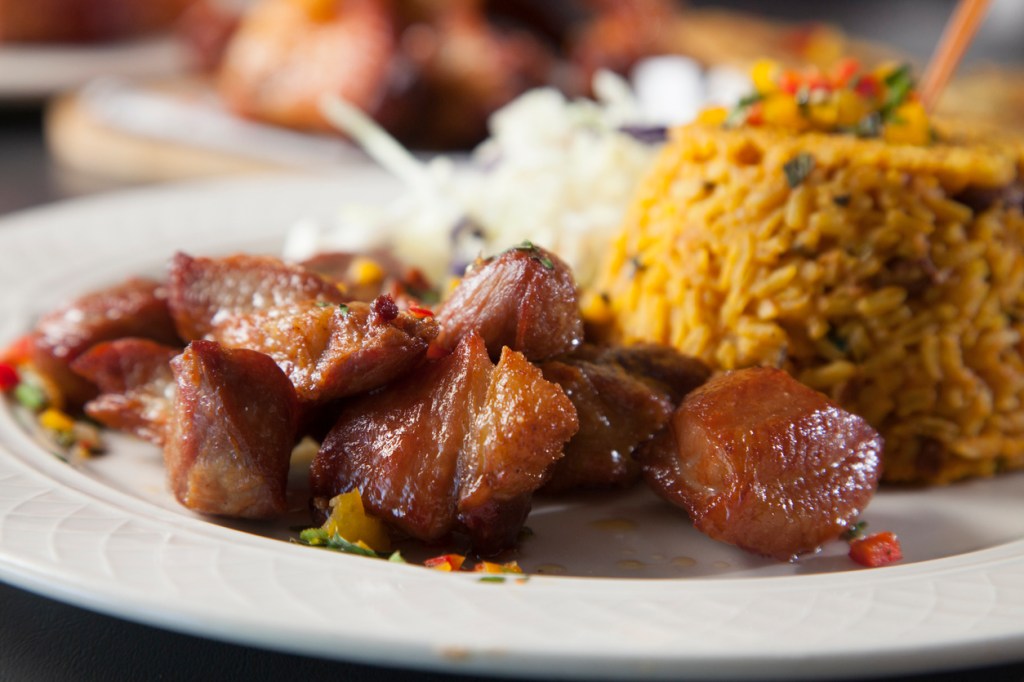
Christmas in Puerto Rico is much more than a single holiday. The season begins shortly after Thanksgiving and continues through Nochebuena, Christmas Day, New Year’s Eve, Three Kings Day, the Octavitas, and the Fiestas de la Calle San Sebastián in January. It is often described as one of the longest Christmas celebrations in the world.
At the center of Puerto Rico’s holiday traditions is food. Families gather around tables filled with slow-roasted pork, arroz con gandules, pasteles, morcilla, traditional side dishes, coconut desserts, and homemade coquito. Music fills the house, neighbors arrive for parrandas, and recipes passed from one generation to the next become part of the celebration.
Puerto Rican Christmas food reflects the island’s layered culinary history, bringing together Indigenous ingredients, Spanish cooking traditions, African influences, Caribbean flavors, and generations of Puerto Rican creativity.
Nochebuena: Puerto Rico’s Most Important Holiday Feast
For many Puerto Rican families, the main Christmas celebration takes place on Nochebuena, or Christmas Eve. Relatives and friends gather for a generous meal, often followed by music, dancing, storytelling, and a late-night parranda.
Although every family has its own traditions, a classic Puerto Rican Christmas dinner may include:
- Lechón asado or pernil
- Arroz con gandules
- Pasteles
- Morcilla
- Guineítos en escabeche
- Yuca al mojo
- Ensalada de papa or ensalada de coditos
- Tembleque
- Arroz con dulce
- Coquito
The menu is important, but the experience is about much more than eating. Preparing the meal, setting the table, sharing recipes, and welcoming guests are all part of Navidad in Puerto Rico.
Lechón Asado: The Centerpiece of the Celebration
Lechón asado is one of Puerto Rico’s most iconic holiday foods. A whole pig is seasoned generously with adobo—typically prepared with garlic, oregano, black pepper, salt, vinegar, and other family-specific ingredients—and slowly roasted over charcoal or an open fire.
The goal is tender, flavorful meat covered by crispy skin known as cuerito. Preparing an entire lechón takes time, patience, and skill, turning the process into a communal event.
Pernil is a more practical alternative commonly prepared at home. Instead of roasting a whole pig, cooks season a pork shoulder with garlic and spices and roast it slowly in the oven until the meat becomes tender and the skin develops its characteristic crunch.
Travelers can experience this tradition along La Ruta del Lechón in Guavate, where roadside lechoneras serve roasted pork with arroz con gandules, morcilla, yuca, tostones, and other traditional dishes. On weekends and during the Christmas season, many lechoneras also feature live music and dancing.
Recipe Snapshot
For homemade pernil, marinate a pork shoulder overnight with crushed garlic, oregano, black pepper, salt, olive oil, and vinegar or citrus juice. Roast it slowly until the meat is tender, then increase the heat near the end to crisp the skin.
Arroz con Gandules: The Essential Holiday Side
Arroz con gandules is one of the most recognizable dishes in Puerto Rican cuisine and the classic companion to lechón or pernil.
The dish combines rice and pigeon peas with sofrito, sazón, annatto, olives, and seasonings. Some families add pieces of pork, ham, or bacon for additional flavor.
Rather than belonging to a single cultural tradition, arroz con gandules reflects the broader history of Puerto Rican cooking. Rice, legumes, aromatics, herbs, and local preparation techniques came together over generations to create a dish that is now inseparable from Puerto Rican celebrations.
It is traditionally cooked in a caldero, the heavy pot found in almost every Puerto Rican kitchen. The most coveted part is often the pegao—the crispy layer of rice that forms at the bottom.
Recipe Snapshot
Sauté sofrito with sazón, tomato sauce, olives, and seasonings. Add pigeon peas, rice, and broth, then cook in a covered caldero until the rice is tender and flavorful.
Pasteles: A Holiday Tradition Made by Hand
No discussion of traditional Puerto Rican Christmas food is complete without pasteles.
Pasteles are savory bundles made from a seasoned masa that commonly combines green bananas, yautía, plantains, or yuca. The masa is spread onto a banana leaf, filled with seasoned pork, wrapped in parchment paper, tied with string, and boiled.
Making pasteles is labor-intensive, which is why many families prepare them together in an assembly line. One person prepares the masa, another cooks the filling, and others wrap and tie each pastel. The process turns cooking into a family tradition.
Recipes vary by town and household. Some cooks add chickpeas, olives, raisins, or peppers, while others insist that certain ingredients never belong inside a pastel. These debates are part of the tradition.
Recipe Snapshot
Prepare a masa using grated green bananas, yautía, plantain, or yuca. Season it with annatto-infused oil and broth, add a spoonful of stewed pork, and wrap it securely in a softened banana leaf and parchment paper before boiling.
Morcilla: Savory, Spiced, and Traditionally Puerto Rican
Puerto Rican morcilla is not a hot dog or an ordinary sausage. It is a rich blood sausage traditionally prepared with pork blood, cooked rice, sofrito, culantro, garlic, spices, and seasonings.
Its roots connect to Spanish blood-sausage traditions, but the Puerto Rican version developed its own flavor through the use of rice, local herbs, and island seasonings.
Morcilla is frequently served alongside lechón at holiday gatherings and lechoneras. It may be boiled, grilled, or finished until the casing develops a lightly crisp exterior.
Its deep, savory flavor pairs especially well with arroz con gandules, yuca al mojo, and pickled green bananas.
Mofongo: Puerto Rico’s Famous Plantain Dish
Mofongo is not exclusively a Christmas dish, but it is one of the foods visitors most closely associate with Puerto Rico and often appears at restaurants and special gatherings during the holiday season.
It is prepared by frying green plantains and mashing them in a pilón with garlic, olive oil or broth, and crispy pieces of chicharrón. The mixture is shaped into a mound and served as a side dish or filled with shrimp, chicken, pork, steak, or vegetables.
Mofongo reflects Puerto Rico’s strong African culinary heritage and is commonly associated with West African preparations such as fufu. Puerto Rican cooks transformed those influences using plantains, garlic, pork, and local cooking methods to create a dish with its own distinct identity.
Recipe Snapshot
Fry sliced green plantains until tender and golden. Mash them with garlic, chicharrón, and a small amount of broth or olive oil. Shape the mixture in a pilón or small bowl and serve immediately.
Classic Puerto Rican Christmas Side Dishes
The supporting dishes are often just as anticipated as the main course.
Guineítos en escabeche are green bananas marinated with olive oil, vinegar, onions, garlic, bay leaves, and peppercorns. Their bright acidity balances the richness of roasted pork and morcilla.
Yuca al mojo combines tender cassava with olive oil, garlic, onions, and citrus or vinegar. Potato salad and macaroni salad are also common, with recipes varying considerably from family to family.
Together, these dishes create the abundance and variety associated with a traditional Puerto Rican Nochebuena table.
Tembleque: Puerto Rico’s Delicate Coconut Dessert
Tembleque is a smooth coconut pudding traditionally served during the Christmas season. Its name comes from the Spanish verb temblar, meaning “to tremble,” because the dessert gently jiggles after it has set.
Unlike many custards, traditional tembleque does not require eggs. It is generally made with coconut milk, sugar, cornstarch, and warm spices, then chilled and topped with cinnamon.
The dessert’s coconut flavor and light texture make it a refreshing finish after a rich holiday meal.
Recipe Snapshot
Whisk coconut milk with sugar, cornstarch, and a small amount of salt. Cook slowly until thickened, pour into molds, and refrigerate until firm. Unmold and finish with ground cinnamon.
Arroz con Dulce: Sweet Rice with Coconut and Spice
Another beloved Puerto Rican Christmas dessert is arroz con dulce, a creamy rice pudding made with coconut milk, cinnamon, cloves, ginger, raisins, and other warm spices.
The rice is soaked before cooking and slowly absorbs the spiced coconut mixture. It is then chilled and served with a dusting of cinnamon.
Like many Puerto Rican holiday recipes, arroz con dulce varies from one household to another. Some families include raisins, while others prefer it without them. Some make it soft and creamy, while others allow it to set more firmly.
Coquito: Puerto Rico’s Signature Christmas Drink
Coquito is the unmistakable drink of Puerto Rican Christmas. Creamy, fragrant, and traditionally served cold in small glasses, it combines coconut with warm spices and, in many recipes, Puerto Rican rum.
A typical coquito recipe may include coconut milk, cream of coconut, evaporated milk, condensed milk, vanilla, cinnamon, nutmeg, and rum. However, every family seems to have its own version.
Some recipes are thicker, some contain more coconut, and others use different combinations of spices or rum. There are also alcohol-free versions for children and guests who do not drink.
Coquito is more than a holiday cocktail. Bottles are often prepared as gifts and shared with relatives, friends, neighbors, and coworkers. The annual debate over who makes the best coquito is part of the fun.
Recipe Snapshot
Blend coconut milk, cream of coconut, condensed milk, evaporated milk, vanilla, cinnamon, and nutmeg until smooth. Add rum if desired, refrigerate thoroughly, and shake before serving.
Parrandas, Music, and the Spirit of Christmas
Puerto Rican Christmas traditions extend far beyond the dining table.
During a parranda, a group of friends arrives unexpectedly at someone’s home playing traditional instruments such as the cuatro, güiro, maracas, guitar, and panderos. The hosts welcome the musicians with food and drinks before joining the group on its way to the next house.
The celebration continues through Día de Reyes on January 6, the Octavitas, and the Fiestas de la Calle San Sebastián in Old San Juan. This extended calendar makes Navidad one of the most joyful and culturally rich times to visit Puerto Rico.
Experiencing a Puerto Rican Christmas During Your Villa Stay
Guests visiting Puerto Rico during the holidays can experience these traditions in several ways.
Spend an afternoon exploring the lechoneras of Guavate, visit a local bakery or market, attend a Christmas festival, or reserve a private chef to prepare a traditional Nochebuena dinner at your villa.
A private villa provides the perfect setting for a family celebration. Guests can gather around one table, prepare coquito in a full kitchen, enjoy music on the terrace, and create their own Puerto Rican holiday memories with privacy and comfort.
Puerto Rican Christmas food is more than a collection of recipes. It represents family, hospitality, history, music, and the joy of sharing. From the crispy cuerito of lechón asado to the coconut and cinnamon in tembleque and coquito, every flavor tells part of Puerto Rico’s story.
This holiday season, go beyond the decorations and discover the traditions that make Christmas in Puerto Rico unforgettable.
Plan your Puerto Rico Christmas getaway with a luxury villa stay and experience the flavors, music, and warmth of Navidad like a local.
 Puerto Rico Insider: Travel, Food & Lifestyle
Leave a comment