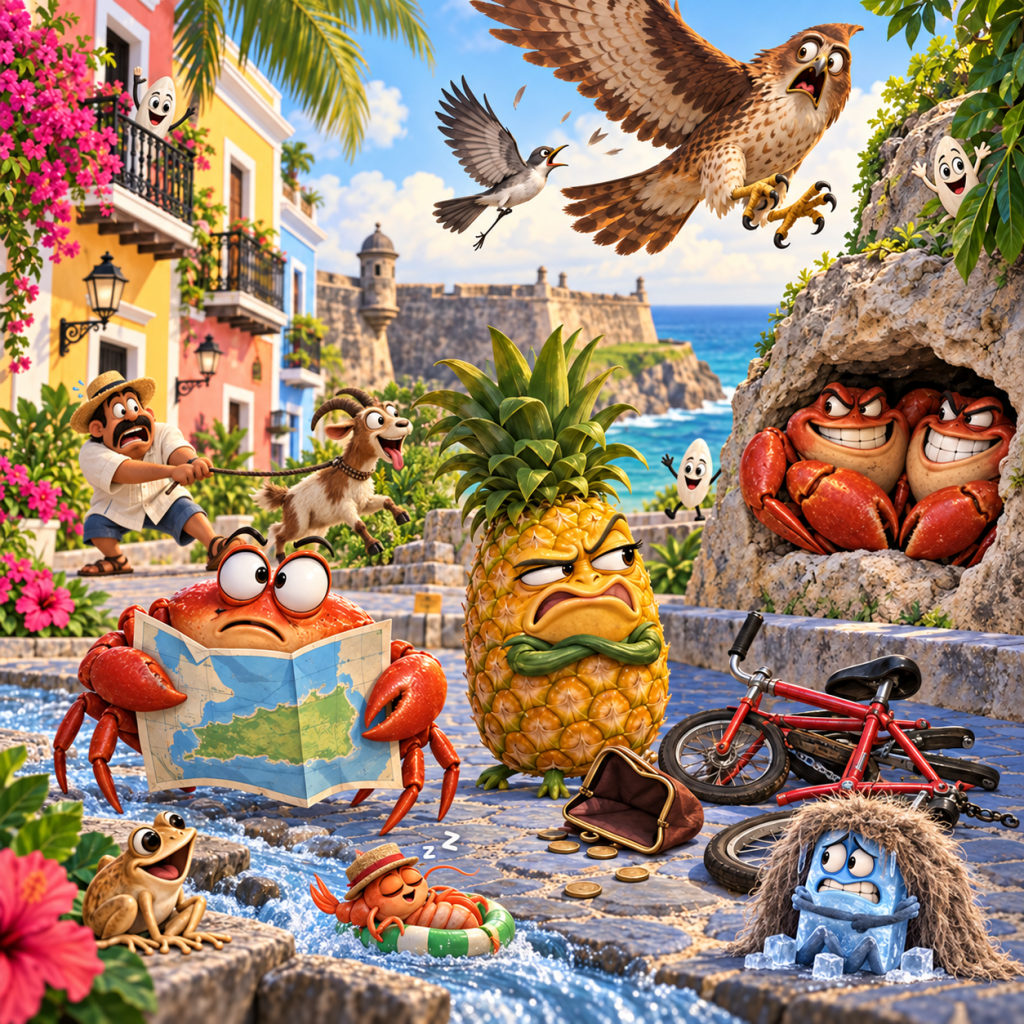
Puerto Rican Spanish has a personality of its own. It is fast, expressive, creative, and filled with words that may leave even fluent Spanish speakers wondering what they just heard.
Boricuas can describe complete confusion with a cross-eyed crab, declare that a plan has failed because a bicycle broke, or warn you about someone’s intentions by saying that an egg needs salt.
The expressions make perfect sense in Puerto Rico. Translate them literally into English, however, and they become absolutely hilarious.
Here are 25 popular Puerto Rican sayings and slang expressions, their literal English translations, and what Puerto Ricans actually mean.
1. Ay, bendito
Literal translation: “Oh, blessed one.”
What it really means: Almost anything, depending on the tone. It can express sympathy, surprise, frustration, tenderness, disbelief, or mild annoyance.
“Ay, bendito, the airline lost your luggage” sounds compassionate. A dramatically extended “Ay, bendito…” may mean you should have known better.
2. Wepa
Literal translation: There really isn’t one.
What it really means: “Yes!” “All right!” “Let’s go!” or simply an enthusiastic expression of happiness.
You may hear “Wepa!” at a party, sporting event, wedding, festival, or anytime a Puerto Rican believes a moment deserves additional excitement.
3. Está brutal
Literal translation: “It is brutal.”
What it really means: It is amazing, impressive, intense, or exceptionally good.
If a Puerto Rican tells you your villa is “brutal,” there is no reason to contact the property manager. You just received a major compliment.
4. A fuego
Literal translation: “On fire.”
What it really means: Excellent, exciting, intense, or operating at full energy.
The beach can be “a fuego,” the party can be “a fuego,” and the food can be “a fuego.” Nothing is necessarily burning.
5. Estar al garete
Literal translation: “To be adrift.”
What it really means: To be without direction, disorganized, out of control, or handled carelessly.
If the vacation itinerary is “al garete,” nobody knows where the group is going, who made the reservation, or why everyone is waiting in the wrong lobby.
6. Se formó un revolú
Literal translation: “A commotion formed itself.”
What it really means: A mess, argument, complicated situation, or general chaos suddenly erupted.
One missing set of villa keys, three cars, and twelve relatives arriving at different times can produce a respectable revolú.
7. Pichea eso
Literal translation: “Pitch that.”
What it really means: Ignore it, forget about it, let it go, or stop paying attention to it.
Your friend wants to continue arguing about where to have dinner. You are already hungry. “Pichea eso” ends the discussion.
8. Vamos a janguear
Literal translation: “Let’s hanguear.”
What it really means: Let’s hang out.
Janguear is a perfect example of Puerto Rican Spanglish: an English expression transformed into a Spanish verb. It can mean going out with friends, relaxing somewhere, or spending time together without a rigid plan.
9. Hay que bregar
Literal translation: “We have to struggle.”
What it really means: We need to handle it, work through it, solve it, manage it, or deal with the situation.
Bregar may be the most useful verb in Puerto Rico. Puerto Ricans bregan with work, traffic, family, repairs, bureaucracy, and practically everything else life presents.
10. Bregaste cajita de pollo
Literal translation: “You handled it like a little box of chicken.”
What it really means: You treated someone badly, betrayed them, played dirty, or failed to handle the situation properly.
This older Puerto Rican expression sounds like a compliment involving fried chicken. It definitely is not.
11. Más perdido que un juey bizco
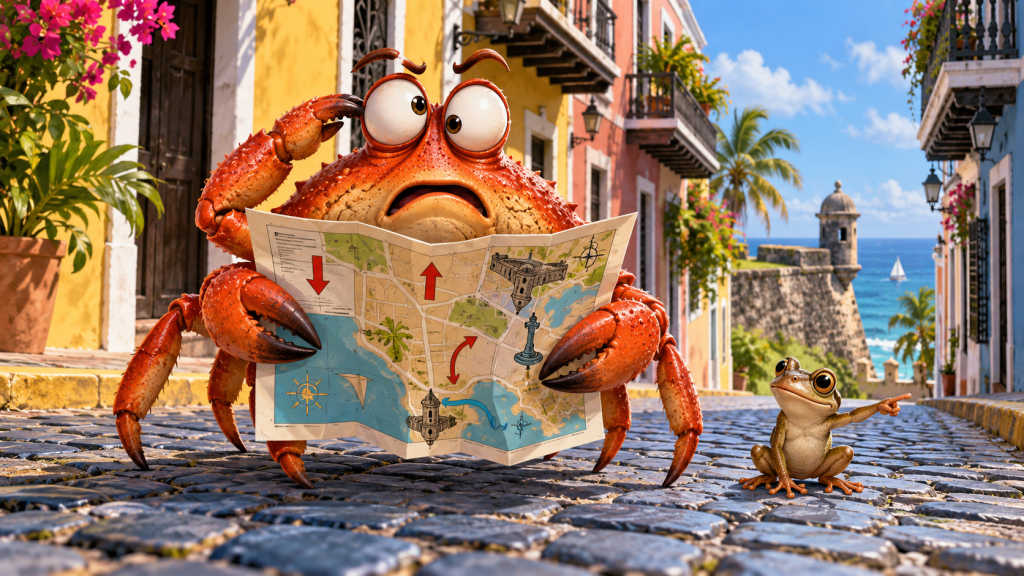
Literal translation: “More lost than a cross-eyed land crab.”
What it really means: Completely lost, confused, or unable to understand what is happening.
A juey already moves sideways. Apparently, making the poor crab cross-eyed guarantees total confusion.
12. Lo cogieron de mangó bajito
Literal translation: “They took him for a low-hanging mango.”
What it really means: Someone was treated as an easy target or taken advantage of because they were accessible, trusting, or unlikely to fight back.
It is Puerto Rico’s fruit-based version of saying someone was easy pickings.
13. La piña está agria
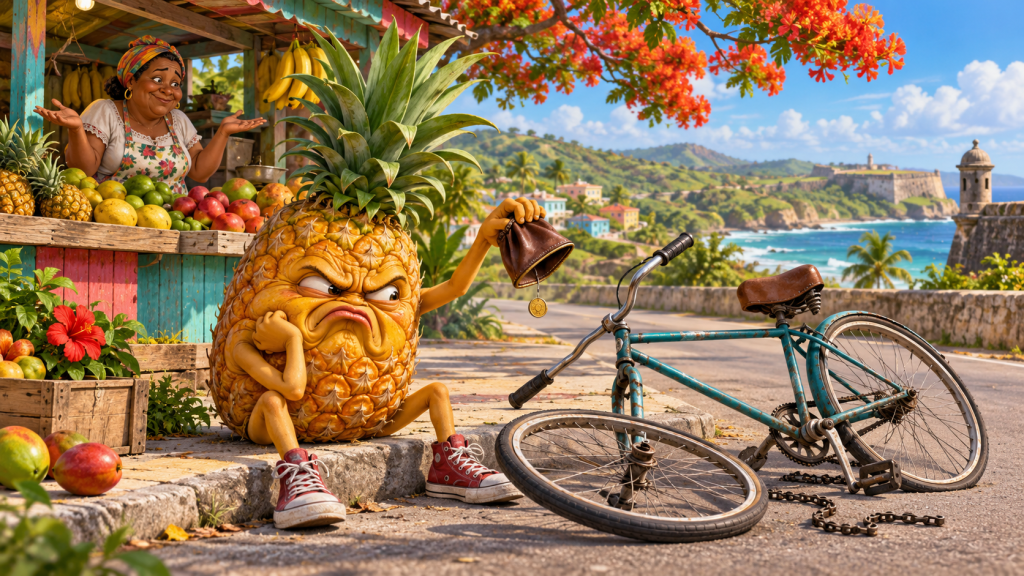
Literal translation: “The pineapple is sour.”
What it really means: The situation is difficult, money is tight, or things are not going particularly well.
If someone says “la piña está agria,” do not offer them a sweeter pineapple. The problem is probably much bigger than the fruit.
14. Cuando Colón baje el dedo
Literal translation: “When Columbus lowers his finger.”
What it really means: Never.
This Puerto Rican version of “when pigs fly” refers to a permanently posed statue. In other words, if someone promises to do something “cuando Colón baje el dedo,” do not wait for it.
15. Cada guaraguao tiene su pitirre
Literal translation: “Every hawk has its kingbird.”
What it really means: Even the biggest or most powerful opponent will eventually meet someone willing to challenge them.
The pitirre is much smaller than the guaraguao, but it is famously fearless when defending its territory. Never underestimate the little bird—or the underdog.
16. Dos jueyes machos no caben en la misma cueva
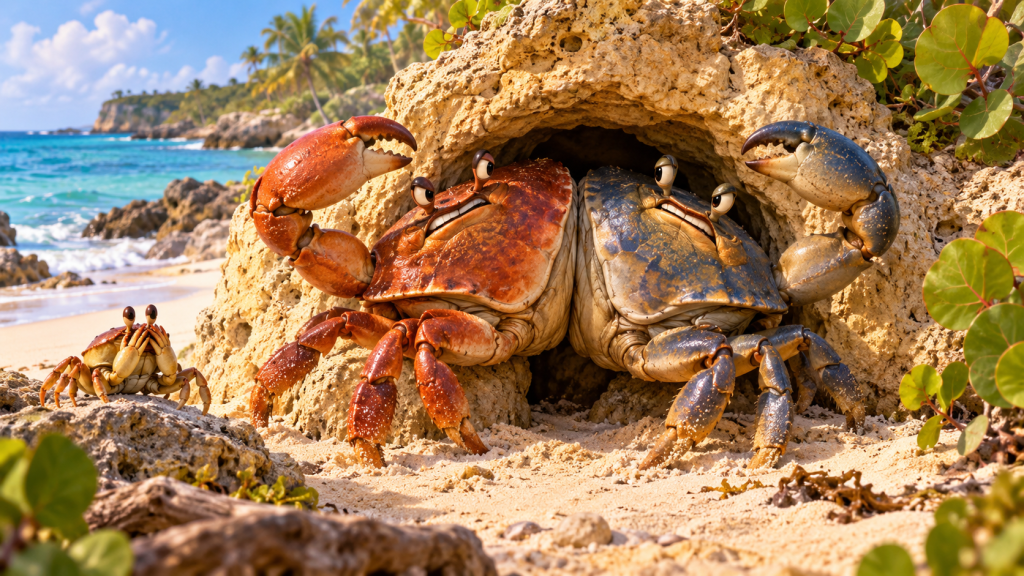
Literal translation: “Two male land crabs cannot fit inside the same cave.”
What it really means: Two dominant, stubborn, or strong personalities will have trouble sharing the same space or authority.
The problem is not really the size of the cave. It is the size of the egos.
17. Hablar a calzón quitao
Literal translation: “To speak with your underwear off.”
What it really means: To speak openly, honestly, directly, and without trying to soften the truth.
When someone wants to talk “a calzón quitao,” expect honesty. Fortunately, everyone’s clothing normally remains in place.
18. Me estoy comiendo un cable
Literal translation: “I am eating a cable.”
What it really means: I am going through a difficult time, I am broke, or I am desperately bored. The precise meaning depends on the context.
It has nothing to do with hunger or electricity, although the literal translation sounds extremely unsafe.
19. Se chavó la bicicleta
Literal translation: “The bicycle got screwed up.”
What it really means: The plan failed, the opportunity is gone, or the situation has become impossible to fix.
Nobody needs to own a bicycle for the bicycle to become officially chavada.
20. Ese huevo quiere sal
Literal translation: “That egg wants salt.”
What it really means: Something suspicious is developing, someone has hidden intentions, or two people may be showing romantic interest while pretending otherwise.
The egg is fine. It is the people you should be watching.
21. A mí plín y a la madama dulce de coco
Literal translation: “Plín for me and coconut candy for the lady.”
What it really means: I do not care at all.
The sentence sounds like a confusing dessert order, but it is actually a colorful declaration of complete indifference.
22. No hay cama pa’ tanta gente
Literal translation: “There are not enough beds for so many people.”
What it really means: Too many people, opinions, complications, or activities are competing for the same limited space.
The expression became widely recognized through Puerto Rican popular culture and works perfectly whenever a gathering becomes bigger than anyone planned.
23. Me dejaron como novia de pueblo: vestida y alborotada
Literal translation: “They left me like a small-town bride: dressed and excited.”
What it really means: Someone was ready and waiting, but the other person never arrived or the anticipated event never happened.
Imagine having the outfit, the hair, the makeup, and the excitement—but no wedding. That is the level of disappointment involved.
24. Tengo una jartera
Literal translation: “I have a stuffing.”
What it really means: I ate far too much and am completely full.
After a plate of lechón, arroz con gandules, pasteles, morcilla, and tembleque, “tengo una jartera” may be the most authentic Puerto Rican expression you use all day.
25. Vamos a meter mano
Literal translation: “Let’s put a hand in.”
What it really means: Let’s get started, take action, work on it, or tackle the situation.
If someone says “vamos a meter mano,” it is time to stop discussing the plan and begin doing the work.
How to Understand Puerto Rican Spanish
Puerto Rican Spanish reflects the island’s history and cultural influences. It includes Spanish expressions, Indigenous Taíno vocabulary, African linguistic influences, Caribbean speech patterns, and words adapted from English.
Puerto Ricans also tend to shorten words during casual conversation. Para becomes pa’, todo may sound like to’, and perdido often becomes perdío. Final consonants may soften or disappear, making conversations sound even faster to visitors.
The best way to understand Boricua slang is to listen to the context, facial expression, and tone. “Ay, bendito” can communicate more emotion than an entire paragraph, while “está brutal” means something completely different from its literal English translation.
Do not worry if you cannot understand everything immediately. Ask what an expression means, laugh at the literal translation, and enjoy learning how Puerto Ricans turn everyday conversation into an art form.
Speak Like a Local During Your Puerto Rico Vacation
Learning a few Puerto Rican sayings is a fun way to connect with the island beyond its beaches and attractions. Try ordering food at a local kiosk, talking with your tour guide, visiting a town festival, or simply listening to conversations around the plaza.
By the end of your stay, you may be saying “wepa,” “ay, bendito,” and “pichea eso” without even realizing it.
Just remember: if your vacation plans go al garete, the piña turns agria, and someone leaves you más perdido que un juey bizco, take a deep breath.
Hay que bregar.
Experience Puerto Rico’s language, humor, food, and culture while enjoying the privacy and comfort of one of our luxury villas.
 Puerto Rico Insider: Travel, Food & Lifestyle
Leave a comment